This edition is sold out 🎉
We're currently redesigning this program into a new two-level format — one live, one online — to make it even more effective. Details on the next edition will be announced soon. [Join the waitlist] to be notified first.
Join the Waitlist
Leave your details and we'll notify you as soon as registration opens for the next edition
By submitting this form you agree to receive occasional emails from Integrative Sciences about this course and related topics (somatic memory, trauma, and integrative approaches to the body). You can unsubscribe at any time.
Integrative Therapy of Somatic Memories
Healing Traumas and Emotional Wounds Embedded in the Body at Multiple Levels
New Insights and Tools to Expand Your Therapeutic Approach
There's always more we can do
I firmly believe that there's always something more that can be done. This applies both in therapy and in everyday life.
When I say I've experienced this firsthand, it's literally true. At 18 months old, I climbed onto the stove and spilled boiling water on myself. I was unlucky but also fortunate. In the end, I only burned my foot and ankle. It could have been worse. I found a skilled surgeon, so there are only minor scars remaining—it doesn’t look like the severe third-degree burn it was. But my body certainly remembered it, and it reminded me at various stages of my life.
From a young age, I couldn’t stand tight clothing. At the time, I was labeled as hyperactive, “nervous,” or “restless.” It wasn’t until years later that I realized my body remembered the painful moments when my bandages were changed. Only by working on that memory both physically and mentally did I resolve the issue.
As I grew older, even though there was no muscle damage, my foot maintained a protective position that led to physical instability, which also affected my emotional stability. It felt like I was always on the edge, both physically and metaphorically. Outwardly, it wasn’t very apparent. I was a highly cognitive child and then an adolescent, able to mask my internal world effectively. In fact, I even received diagnoses on the autism spectrum or Asperger’s. Later, I discovered these were partly accurate. Some of my behaviors were due to the lack of pruning in my neural networks (caused by being unable to walk for a few months after the burn, during a critical phase of neurodevelopment). But I was just a curious child who loved studying, so those diagnoses didn’t affect me much—I only saw the positive aspects (a great memory, winning math competitions, etc.). The problem was the underlying emotional bomb stemming from my foot’s posture, amplified by subsequent physical-emotional adjustment mechanisms higher up in my body. I managed to compensate for a long time on my own (but it was exhausting!), then received significant help from psychotherapy and other approaches (including more personal and artistic ones). Yet something was missing. I found that missing piece after various experiments, combining eye movements taught by a functional neurologist, a release technique taught by an unconventional physiotherapist, and some procedures I then called hypnotic (today I would categorize them under memory reconsolidation).
By integrating different disciplines and conducting numerous experiments, I've consistently found that there’s always more that can be done. For over 25 years, I have studied these aspects, conducted research, and dedicated my life to helping people who need this type of approach.
In this course, I share the synthesis of these years of work, with a particular focus on somatic memories and practical solutions. If you also wish to help others in these areas, I look forward to welcoming you to the course.
Dr. Fabio Sinibaldi - Founder of Integrative Sciences

Multiple Levels of Somatic Memories
Address All of Them!
We have learned that traumatic memories can shape specific postures. By working on the somatic level (as it is more widely understood today), we help patients reprocess and restructure these memories, thereby altering their posture. True.
However, sometimes the posture doesn't fully change, even when there have been significant emotional improvements.
For instance, shoulders may be less tense, less forward or elevated, but still not in a physiological state. Bodily irritability remains significantly high. Alternatively, abdominal tension stays prominent. Or, the gaze remains averted, now more as a reflex than an emotional response.
These still-active patterns affect two levels: on one hand, they prevent the complete reprocessing of the trauma (because a piece is missing), and on the other, they manifest as other bothersome symptoms (the classic somatizations, such as stomach acidity, muscle pains, etc.).
This is due to different somatic memories. Understanding their mechanisms and having the right tools to address them is essential.
Find further insights on the main types of memories below.


1. Peripheral Bodily Memories that remain active even after Central Memories have been modified in psychotherapy
These are memories embedded in the peripheral nervous system, within muscles and tendons, which possess their own autonomy. Therefore, they require targeted action, easily achievable through simple movements.
CASE EXAMPLES:
- Head Tilted Downward and Sideways: Appears as shyness but is actually a somatic memory of the protective reflex triggered when hitting a deer with a car (without physical harm to themselves).
- Stiff and Unnatural Gait: Caused by hypercontracted thigh adductor muscles following sexual abuse.
- Raised Shoulders in Children: Maintaining the posture adopted when being scolded as a young child.
TOOLS:
Through simple physical exercises (which patients can perform without the need for contact, simply by following our instructions) combined with techniques for mental-emotional reprocessing, these local memories can be easily released. This leads to greater overall well-being, completes the work by enhancing the ability to stay within the window of tolerance (and expands it). Additionally, it often frees narrative and implicit memories, which can then be reprocessed and integrated in various ways.
2. Memories of the network-that-connects-the-whole-body in Patterns that "trap" or "block" the body
These bodily patterns generate the same sensations perceived at the physical level (blockage, entrapment, entanglement) as well as at the level of motivation and personality.
This level (technically located within the neuro-myofascial network) significantly influences emotions, body maps, and self-image.
CASE EXAMPLES:
- Teenager with shortness of breath and lump in throat: Despite excellent work on breathing and emotional regulation.
- Young man with protective shoulder position: After a scooter accident, maintaining the position despite effective work by a psychotherapist and physiotherapist.
- Chronic and/or Neurogenic Pain: Broad but variable localization (e.g., sometimes lower back, sometimes one of the glutes, the so-called 'sciatica' appearing irregularly, etc.).
TOOLS
You will learn techniques and exercises for your patients to perform and/or interact with them to unblock dysfunctional patterns embodied in the body.
The work proceeds in stages: first, bodily release; then reprocessing; culminating in multi-level integration (body, emotions, thoughts, identity).


3. Scars have their own Memory of the Traumatic Event
Scars (from accidents, such as cuts or burns; as well as surgical scars from childbirth or cosmetic surgery) and burns, if left untreated, create a negative biofeedback loop with all other memories connected to the event that caused them. This prevents proper reprocessing and the possibility of integration.
CASE EXAMPLES:
- Patient with medium-sized Burn Scar: Physically healed but still aware of active effects (e.g., not accepting the injury and their altered self-image).
Patient with a small arm burn scar: Healed and no longer visible, but with ongoing effects they are unaware of. This leads them to exclude the entire left arm from their body map, causing back pain, a distorted self-image, and clumsy movements that are often mistaken for ADHD symptoms.
Patients with Scars from Childbirth: Scars that compromise activation and sensitivity in the surrounding area.
Surgical Scars with Negative Connotations: (e.g., tumor removal) or positive and voluntary (e.g., breast implants) that prevent the correct reprocessing of the new self-image and/or maintain dysfunctional activation states, even if the traumatic memory has been reprocessed.
TOOLS
You will learn specific exercises that patients can perform independently under your guidance at home. These exercises help to release dysfunctional associations between physical pain, wound direction, breath blockage, and their related sensory, emotional, and cognitive levels.
4. Eye Movements to Use in New Specific Ways
Even in a well-established area like the connection between eye movements and traumatic memories, there are exciting new discoveries. For example, we will explore how to use eye movements toward the lesion/trauma and away from it to effectively reprocess related traumatic memories. Additionally, this approach can help balance the Central Autonomic Network (CAN), which we can describe as the "control center" of our self-regulation system.
CASE EXAMPLES:
- Patients who, during a collision—whether in sports or while accidentally bumping into someone while walking—direct their gaze in the opposite direction, preventing them from seeing the moment of impact.
- Patients Fixated on a Traumatic Element: Unable to look away when seeing a traumatic detail (e.g., someone looking at a wounded hand and realizing the cut is worse than expected; someone seeing a friend injured in an accident and unable to determine if they are alive or dead).
- Individuals with Concentration Difficulties.
- Individuals with Low Psychological and Behavioral Flexibility: (e.g., rigid thinking, difficulty considering others' viewpoints, restrictive habits, procrastination, etc.).
TOOLS
To address these aspects, we will introduce tools to incorporate into existing techniques as well as new specific techniques. The first category includes specific eye movements (different from those used in EMDR) that can be integrated into various memory reconsolidation and reprocessing procedures. The second category includes targeted techniques, such as the Inverse Physiological Replay.


5. Other Levels
There are additional levels of somatic memory, ranging from the cellular level (mitochondria, cellular protective reflexes, etc.) to alterations in the immune and metabolic systems. In this course, we specifically address the first four levels. For these other levels, you may consider enrolling in the Professional Master in Applied Integrative Sciences.
Who Is This Course For?
This course is designed for trauma-specialist professionals who wish to expand their toolkit and integrate advanced somatic interventions into their professional practice.
Whether you already have experience in somatic therapies or are new to these concepts, this program will provide you with the tools and techniques to address trauma and somatic memories in ways not available through other methods. These techniques have been developed by integrating disciplines such as Functional Medicine, Functional Neurology, the latest advancements in Memory Reconsolidation, PsychoNeuroEndocrinoImmunology, and other disciplines grounded in solid scientific foundations.
These intervention techniques and strategies have been refined for use in different settings by Dr. Fabio Sinibaldi and with the support of a team of professionals from the Association for Integrative Sciences, ensuring their standardization and optimization.


COURSE PROGRAM
INTEGRATIVE THERAPY OF SOMATIC MEMORIES
PRE-COURSE
The course is highly practical and focused on the direct experimentation of techniques.
Therefore, it is required to complete two online modules from the HUB beforehand (included in the enrollment; see details at the end of this page):
- RePro Course: On the processes of Memory Reprocessing and Reconsolidation
- Psychosomatic Stretching Course: Included in the module on Isometric Emotions
COURSE
4 TYPES OF TECHNIQUES AND TOOLS
The course is structured around four types of techniques, each with different exercises and specific objectives.
The activities are designed to promote practice, allowing direct experience of the techniques and their application methods. The main theoretical references necessary for proper understanding will be provided, always keeping practice at the forefront.
Psychosomatic Releases
-
Techniques to release peripheral memories that alter posture and movements associated with trauma, and to improve physical and emotional freedom
-
Objective: Release somatic memories locked in individual muscles/tendons (e.g., a higher shoulder or a tilted head) or muscle chains (e.g., the forward closure of the entire body)
-
Key Elements: working on Resources, sense of Power and Agency, Identity
-
3 Techniques: Release of Psychosomatic Points, Contraction in Reduction, Psychosomatic Stretching
-
Techniques available in a basic version and in synergy with reconsolidation processes
-
Focus on areas with particular psychosomatic significance
-
Practical Exercises
Emotional-Fascial Release
-
Skin-Ego, Armor, Body Armor, Protective Postures are some of the ways the early pioneers began to define the deep relationships between body, personality, trauma, and emotions. Today, we can revisit and expand these ideas thanks to significant scientific contributions. Specifically, science has revealed that there is a 'suit' that covers our entire body, aptly explaining these mind-body phenomena: the neuro-myofascial network. By identifying blockages and densifications in this 'suit' or 'network' and working on them, it is possible to restore patients' profound sense of freedom and a full, coherent identity. In other words, it allows them to "live well and fully in their bodies."
-
Objective: Release somatic memories at the neuro-myofascial level (starting from points of physical-emotional discomfort or blockage; points of chronic or recurring pain; visible densifications in the body)
-
Key Elements: Implications for self-image and identity, sense of freedom, sense of mastery, free resources vs. blocks, body maps
-
Techniques: One basic technique with variations
-
Available in a basic version and in synergy with reprocessing and reconsolidation processes
-
Focus on areas with particular emotional and traumatic significance
-
Practical Exercises
Integration and Release of Scars
-
Techniques to treat scars related to trauma (from accidents or surgery, including voluntary surgery), promoting complete and long-term healing
-
Objectives: Address somatic memories held in scars, tears, and burns
-
Key Elements: implications for self-image and identity, alterations in body maps, dual traumatic memory (of the cause and the surgical intervention)
-
Techniques: One basic technique with variations
-
Approach: Available in a basic version and in synergy with reprocessing and reconsolidation processes
-
Focus on specific causes and contexts: sports, physical trauma, physical-emotional trauma, interpersonal conflict, aggression, abuse, etc.
-
Practical Exercises
Advanced Eye Movement Techniques
-
Tools and Techniques to unlock traumas stored in pure visual and visual-perceptual-motor systems, enhancing other techniques or introducing targeted new methods
-
Objectives 1: Facilitate the reprocessing and reconsolidation of traumatic memories through specific eye movements (distinct from EMDR and other techniques) that are linked to the particular eye movements experienced during the trauma.
-
Objectives 2: Utilize specific eye movements to address particular cognitive-emotional activations (such as negative emotional forecasts, managing states of uncertainty, etc.).
-
Key Elements: Leverage the multi-level activations of eye movements (perceptual system, neurological activation, memory access, neural plasticity, involvement in safety systems and unpredictability management, etc.) to promote the processes of reworking, reprocessing, and integrating memories.
-
4 Techniques: Eyes Away, Smooth Chasing, Fluidity Tracking, Inverse Physiological Replay
-
Practical Exercises
Learn Something New and Complementary to Your Current Training
In the evolution of psychology and psychotherapy, there have been four major advancements regarding the integration of the body. For simplicity, we will focus here on the two most recent developments.
Below is a concise and non-exhaustive representation that provides a quick overview of the scope of each modality.
Additionally, the area where the two colors overlap represents a convergence of themes, but the perspectives and techniques differ.
Note: the two modalities are not alternatives; they complement and enrich each other.
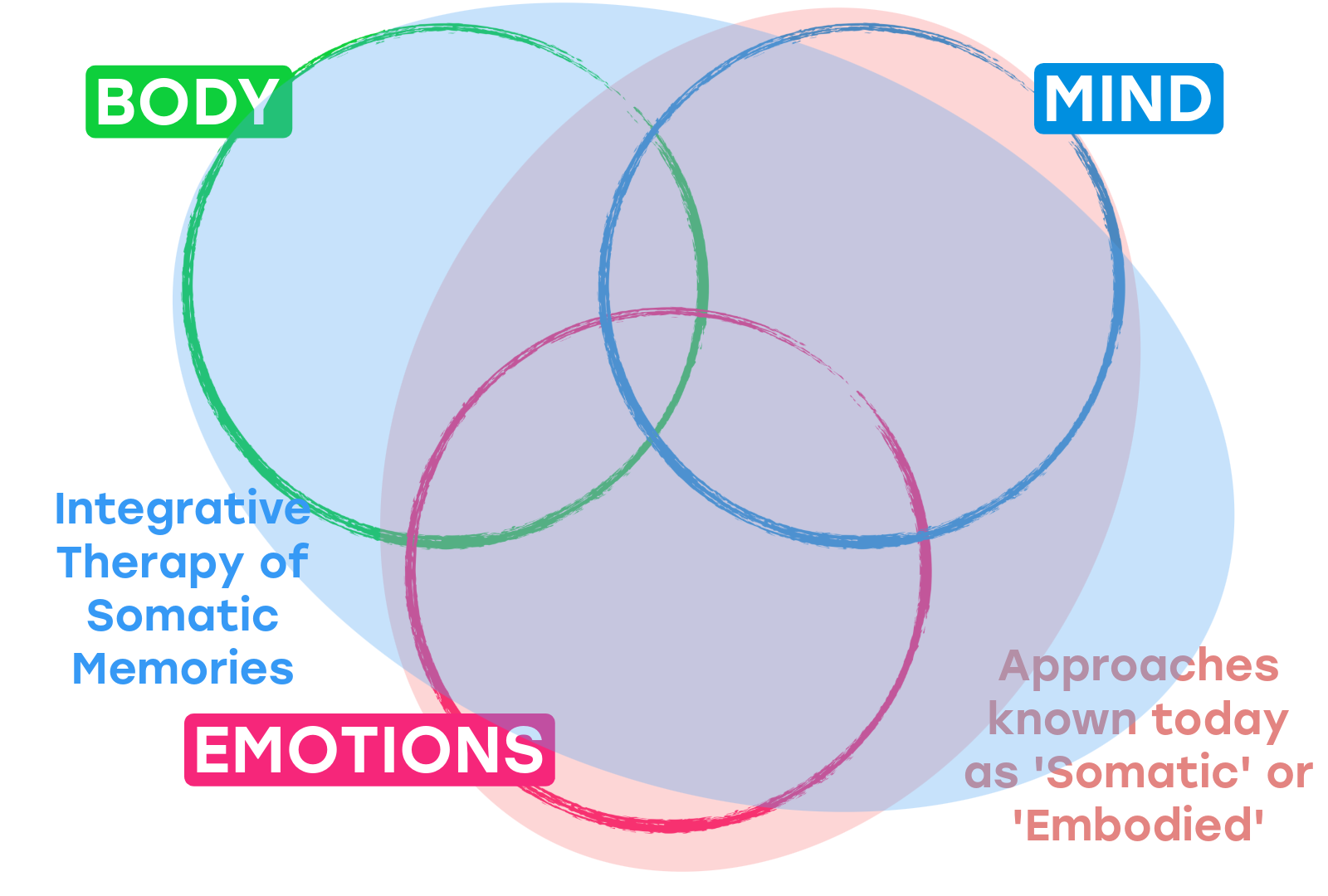
This course is centered on Somatic Memories Therapy. It does not cover what is already included in other approaches (such as EMDR, Sensorimotor Therapy, Somatic Experiencing, Polyvagal Theory, Somatic Parts Work, Bioenergetics, Functional Body Psychotherapy, etc.).
Instead, this course provides the specific tools and unique techniques of Somatic Memories Therapy.
These tools and methods can be used independently or integrated with your usual working methods, making your practice even broader and more versatile.
Discover more details and examples below.
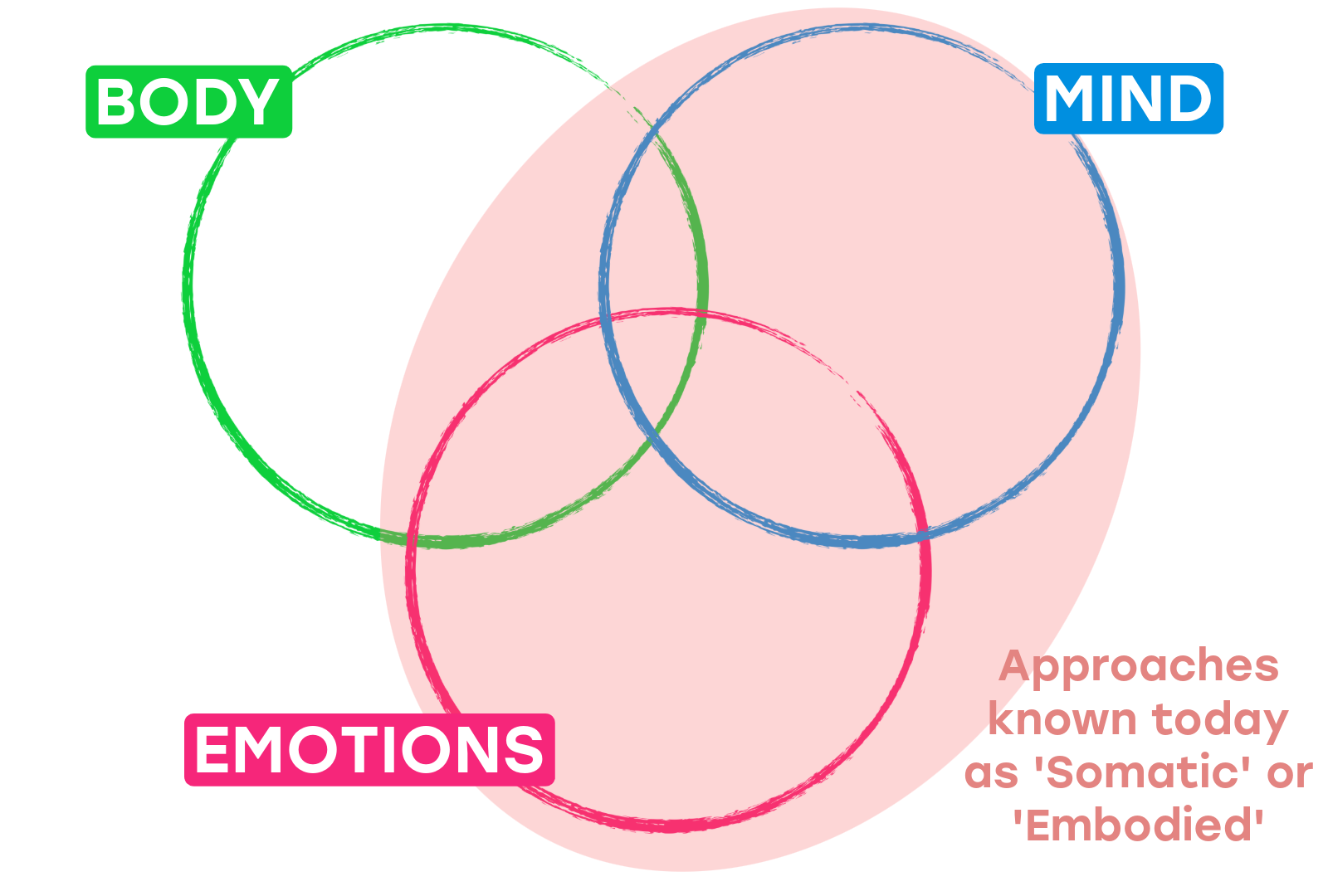
Approaches Known Today as 'Somatic' or 'Embodied'
These are the most widely recognized approaches in the field of body-centered psychotherapy, identified by the terms 'somatic' or 'embodied'. They have made significant contributions, including: Body Awareness, Sensory Awareness, Interoception, Bilateral Stimulation, Vagus Nerve Focus, Stabilization Techniques, and more.
As shown in the graphical representation, the body is extensively involved in these processes. However, there are still other bodily aspects that can be integrated.
For example: Interoception is primarily managed at the body's static level (the body remains still during exercises like body scans and grounding). In Integrative Therapy of Somatic Memories (ITSM), micro-movements, reverse movements, and other modalities are used to provide additional sensory and integrative stimuli to the insula and hypothalamus, enhancing interoceptive work.
In classic 'somatic' approaches, the limbic system, HPA axis, and vagus nerve play significant roles. In ITSM, by combining this knowledge (and related tools) with targeted interventions on muscle chains connected to different stress axes or scar memories, it is possible to achieve an even broader therapeutic impact.
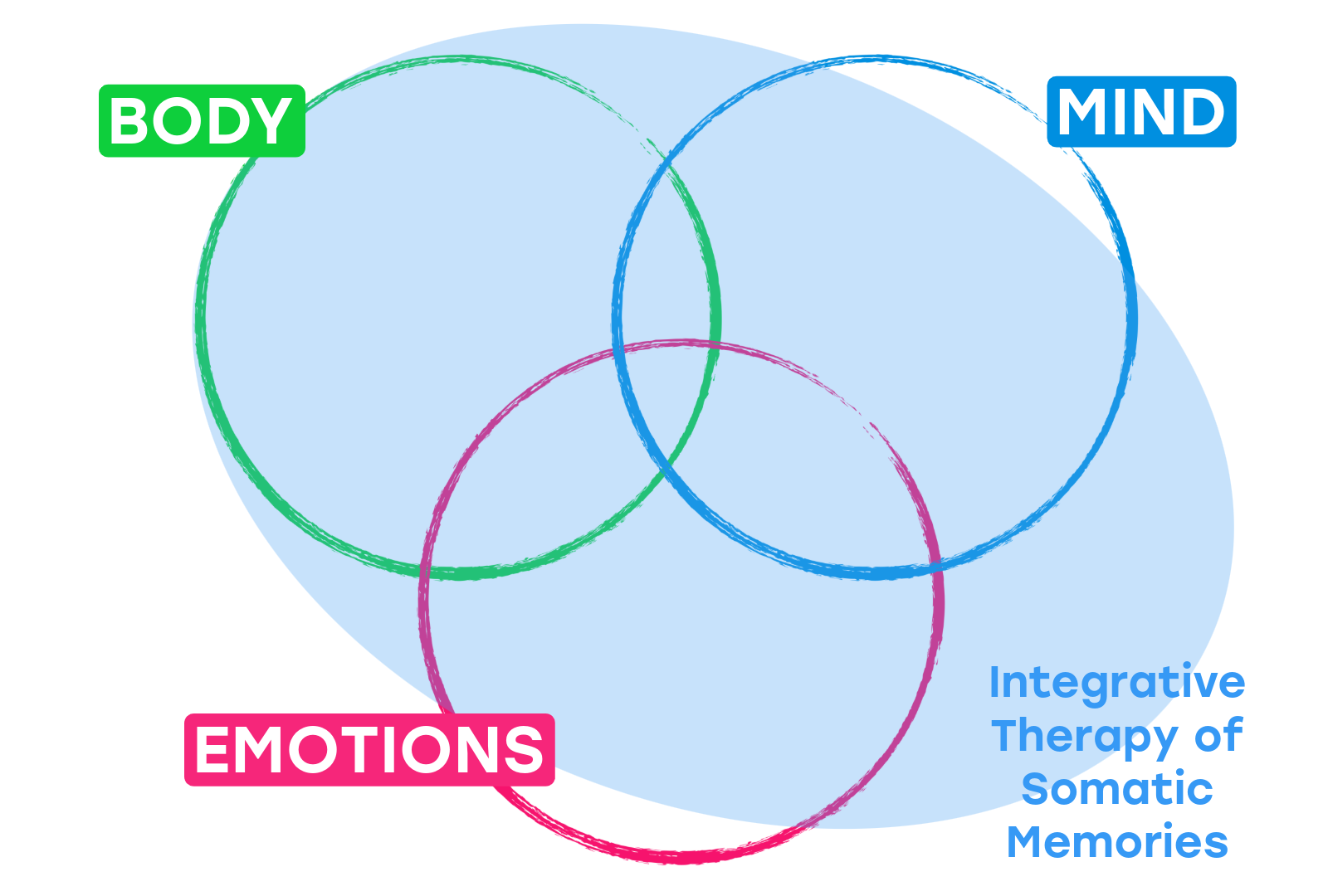
Integrative Therapy of Somatic Memories
Thanks to recent discoveries in the neuroscience of emotions and traumatic responses and the integration with other disciplines (such as stress response anatomy, functional neurology, study of the neuro-myofascial system, etc.), it is now possible to have an even broader and multi-level understanding of posture and movements related to trauma and emotions.
Furthermore, it is possible to develop variations and enhancements of tools elaborated in other somatic approaches, as well as to introduce new techniques.
For example:
- Eye Movements: Can be used in specific directions relative to their position during the trauma.
- Push Techniques: (e.g., those used in sensory motor therapy) can be enriched with rotational movements that respect muscular anatomy (thereby unlocking peripheral memory) and amplify the sense of agency and power.
- Primitive Reflexes, Emotional-Fascial Release, Contraction in Reduction, Pattern Retraining: these are specific techniques unique to Integrative Therapy of Somatic Memories and are exclusively available in this course.
These are just a few examples; you will find more in the program and other sections of this page.
When and Where
1. Online Pre-Course
The course is highly practical and technique-focused. Therefore, it is required to complete two online HUB modules beforehand (included in your enrollment; see details at the end of this page):
- RePro Course: On the processes of Memory Reprocessing and Reconsolidation
- Psychosomatic Stretching Course: Included in the Isometric Emotions module
2. Live Course
Updates coming soon.
Course Structure:
-
Pre-Recorded Modules:
Access high-quality video lessons that you can watch at your own pace. Each week, new content will become available, allowing you to build your knowledge progressively over six weeks. -
Optional Individual In-Depth Online Sessions:
Enhance your learning experience with personalized online sessions. These in-depth consultations provide tailored guidance to deepen your understanding and application of the course material.- Availability: During and after the course
- Note: These sessions are optional and not included in the basic enrollment fee.
-
Certification Pathway:
To become a Certified Professional in Integrative Therapy of Somatic Memories, participation in individual in-depth online sessions is mandatory. These sessions ensure you achieve the highest level of proficiency and are fully prepared to integrate these advanced techniques into your professional practice.
Enrollment Options:
-
Basic Enrollment:
Gain full access to all pre-recorded modules and course materials. Perfect for those looking to enhance their skills and knowledge independently. -
Certified Professional Enrollment:
Includes everything in the basic enrollment plus the required individual in-depth online sessions. This pathway is essential for those aiming to obtain certification and elevate their professional credentials.
Don’t miss out on this opportunity to transform your therapeutic practice with advanced somatic memory techniques.
Register Today and secure your spot with our limited-time discount!

Testimonials
What Those Who Have Learned These Techniques Are Saying

Emma Johnson
"The depth of this approach is truly impressive. I’ve been using somatic methods for years, but Integrative Therapy of Somatic Memories takes everything to a level I had never reached before. The blend of cutting-edge neuroscience, emotional-myofascial techniques, and a pragmatic approach has significantly expanded my professional toolkit. My clients are responding very well to these new techniques."

Alejandro García
"I work extensively with the body, and this approach was exactly what I needed to deepen my understanding of the mind-body connection beyond the widely known and established knowledge. The techniques for releasing somatic memories have allowed me to help clients on a level I never thought possible."

Liam O'Connor
"I’ve attended many trauma courses, but this one stands out. The focus on releasing somatic memories is incredibly practical and effective. The work on scars is something I’m utilizing much more than I could have ever imagined. I now also have new tools to work with clients struggling with chronic pain paired with unresolved emotional issues."

Nadia Petrova
"The techniques for addressing deeply hidden somatic memories are unique and unlike anything I’ve encountered before. I now view my clients with different eyes and, as Fabio says, even the word 'somatic' now carries an entirely different meaning."
Designed, Developed, and Led by
Fabio Sinibaldi, PsyD, MBPsS
Psychologist, Psychotherapist, and Accredited Member of the British Psychological Society (Neuropsychology Division & Psychobiology Section).
President of the Association for Integrative Sciences.
An expert in Neuroscience and Psycho-Neuro-Endocrine-Immunology, Fabio integrates these sciences with a modern evolutionary and ethological perspective.
He is the creator of Integrative Sciences, Change Switches, Integrative Functional Patterns, and techniques such as Isometric Emotions, Ideographic Thinking, along with numerous other integrative tools designed to specifically address psychosomatics, chronic stress, trauma, self-regulation, emotions, and developmental processes.
With an international career spanning over 25 years, Fabio serves as a faculty member for various specialized schools, conducts seminars for both Italian and international universities, and regularly participates as a speaker at national and international conferences.
He is the author of several books and articles, including:
STRESS, EMOTIONS, and HEALTH – The Manual for Integrated Professionals:
Acting on All Mind-Body Levels with a Scientific and Multidisciplinary Approach
Fabio's extensive experience and innovative methodologies have positioned him as a leading figure in the field of integrative somatic therapies. His dedication to advancing therapeutic practices ensures that professionals who undertake his courses gain access to cutting-edge techniques and a profound understanding of the mind-body connection.


REGISTRATIONS
Enroll Today in the Course
Integrative Therapy of Somatic Memories:
Healing Traumas and Deeply Embedded Emotional Wounds in the Body
OFFER – 20% OFF
(After this date, the standard course fee will be €380)
300 € for the course
+ 90€ HUB membership fee
(if you are not already a member)
This provides access to additional online courses and other benefits.
HOW IT WORKS
This course consists of:
> A 6-week online course
> 2 online pre-course modules to be completed in advance
The two online modules are part of the Integrative Sciences HUB.
Therefore:
If you are already a HUB member, you can enroll in the weekend and pay only for that.
If you are not yet a member, you can enroll in both the HUB and the live weekend course simultaneously.
(Enrollment for both is quick and occurs through two automatic subsequent steps.)